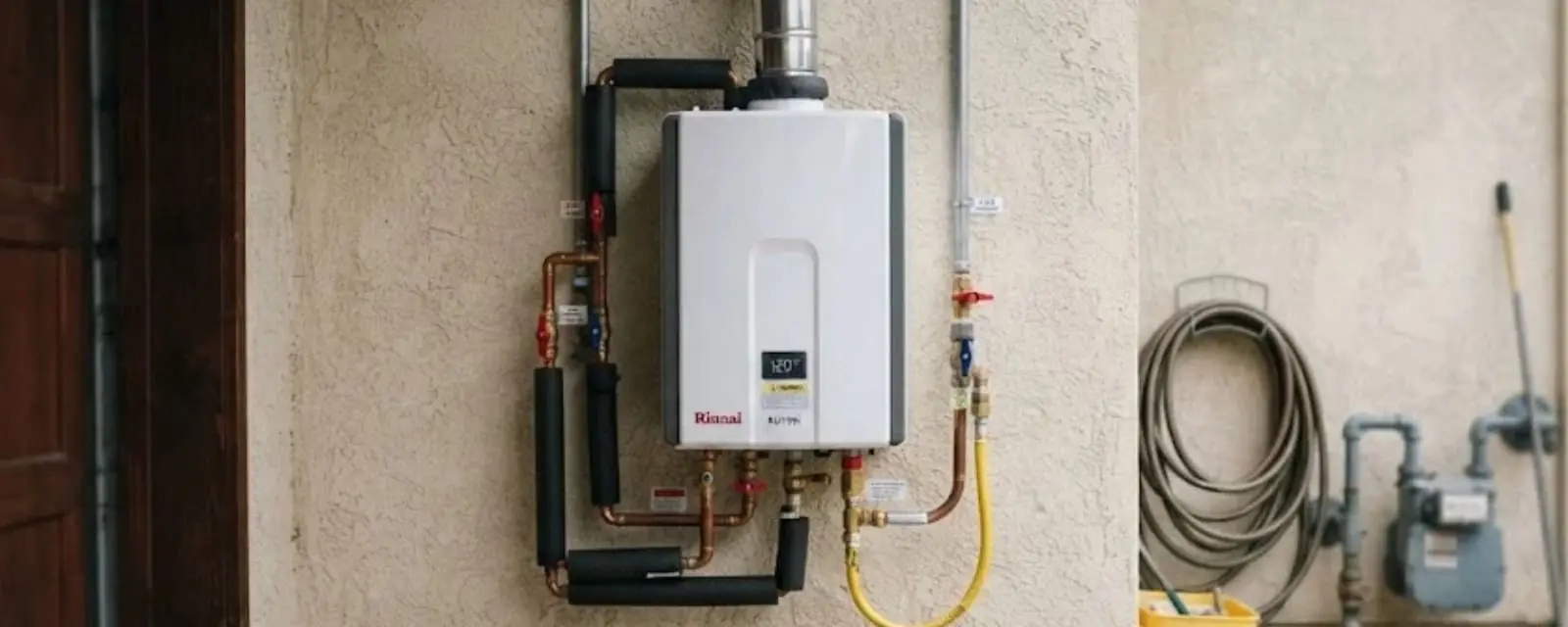
What a shower asks of a heater
A shower needs a steady flow of hot water at a comfortable temperature. A typical showerhead uses a couple of gallons per minute. Add a body spray or a rain head and the number rises. The heater has to raise the temperature of that flow from the cold water entering the home to the shower temperature.
That temperature rise is the key. In winter, groundwater and incoming water are cold, so the heater must work harder. A unit that is fine in summer can feel weak in January. When you compare models, ask for the flow rating at a winter temperature rise, not the brochure maximum.
Sizing for one shower and for two
Start by listing every shower, tub and fixture you might use at once. Add the flow rating of each. If two showers run together, add their flows. Match that total to the unit's rating at your temperature rise.
One shower in a small household may be easy. Two showers, a dishwasher and a washer at once may need a larger unit or two units. Some homes also add a recirculation loop. Our tankless page explains the technology and water heater installation covers planning.
Problem right now?
Call to ask about help at your address.
Sizing guide idea
Use the actual rating on your showerhead and the unit label.
| Situation | What to check | Likely result |
|---|---|---|
| One shower, winter | Unit flow at winter rise | Usually fine if sized |
| Two showers at once | Add the flows | May need a larger unit |
| Shower plus dishwasher | Add the flows | Check the peak |
| Low-flow showerhead | Minimum flow to fire | Some units need a minimum |
The cold sandwich and the minimum flow
Two quirks surprise new owners. A unit needs a minimum flow to fire, so a very low-flow shower or a trickle may not start it. And if you turn off the water briefly and turn it back on, a slug of cold water can pass before the unit reheats, the so-called cold sandwich.
Newer units reduce both problems, and a small buffer tank or a recirculation setup can help. Ask about the unit's minimum activation flow and whether low-flow heads will work. Choose showerheads with flow near the unit's design.
Gas or electric
A gas tankless unit delivers more flow in cold climates and needs gas piping and venting. An electric unit needs a heavy circuit, and a whole-house unit can demand more power than a panel supplies. For showers in a northern climate, gas models are common, though an electric point-of-use unit can serve a single bathroom far from the heater.
We install in West Chicago and also serve Geneva and Carol Stream. Ask for a sizing worksheet before you buy.
Making a tankless shower comfortable
Comfort depends on more than the unit. A pressure-balancing or thermostatic shower valve keeps the temperature steady when other fixtures run. Showerheads with a flow near the unit's design avoid the minimum flow problem. A short pipe run from the heater to the shower reduces the wait for hot water.
If the shower is far from the heater, consider a recirculation loop or a small point-of-use unit near the bathroom. If a shower turns cold when someone flushes a toilet, the valve may not be balanced, and the fix may be at the valve, not the heater. Ask your plumber to look at the full system.
Questions to ask a plumber
What is the flow rating at a winter temperature rise? What is the minimum flow to fire? What is the gas line size needed? How will the unit vent? Where does condensate drain? How often should it be flushed? What does the warranty cover, and who services it?
Ask for the answers in writing. A plumber who can explain the numbers is more likely to size the unit well. If the answers are vague, keep looking. A tankless heater is a long-term purchase.
Water quality and the shower
Scale in a tankless unit lowers its output. A shower that was once strong becomes weak or hot and cold by turns. Flushing with a mild acid solution, usually vinegar or a descaler, restores flow. Do it yearly or as the maker advises.
If your water leaves scale on the showerhead, test your tap before you buy a unit, since a softener may protect the investment. See water softener service for how we approach the question. A sediment filter before the heater also protects the inlet screen from debris.
Sources and standards used on this page
The sources behind this guide on tankless hot water heater for shower are listed here. Two state sources frame this work. The Illinois Plumbing Code sets the technical rules, and the Illinois Plumbing License Law says who may do it. Both are public, and the Illinois Department of Public Health keeps the licence lookup. Local rules, where they apply, come from your own city.
What West Chicago homeowners should know locally
West Chicago's water comes from wells and is treated before it reaches your home, and the city's report is available from Public Works at (630) 293-2255. Cold groundwater temperatures in an Illinois winter mean a larger temperature rise than you may expect, so size for winter.
Gas for many homes comes from Nicor Gas, whose emergency number is 888.642.6748. Check with West Chicago Community Development at (630) 293-2200 for permit rules before changing gas piping or venting.
Questions homeowners ask
It gives continuous hot water up to its flow rating. Beyond that, flow or temperature drops.
Only if the unit is sized for both at winter temperature rise.
A cold sandwich after a short pause. Newer units reduce it.
Often yes. A plumber measures and sizes it.