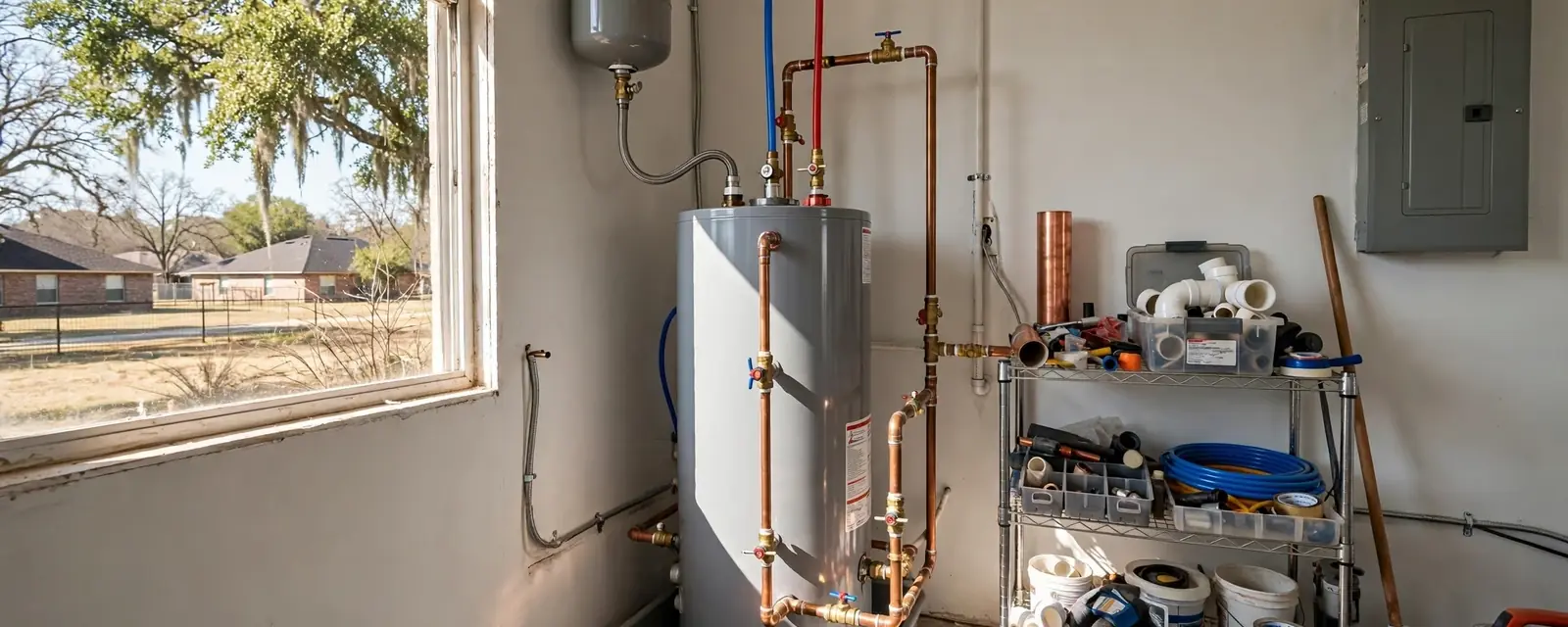
Planning a new heater installation
A planned installation is different from an emergency swap. You have time to choose a size, a fuel and a type, and the result will be better for it. We start with how many people live in the home, how many bathrooms you run at once, whether you have a soaking tub, and where the heater will sit.
New construction and additions need a different conversation than replacement. A new line needs a gas supply sized for the appliance, a vent path that meets the manufacturer's rules, a floor drain or drain pan, and a relief valve pipe that goes somewhere safe. These details are cheap to plan and expensive to fix later.
If your old heater has already failed, see water heater replacement for the fast path.
Sizing, venting and the details that matter
Tank size is a balance of first-hour rating and floor space. Too small and the family waits. Too large and you pay to keep extra water hot. Tankless units are sized by flow and temperature rise, and the colder the incoming water, the bigger the burner has to be. Illinois winters make incoming water colder, so we size tankless units for winter, not summer.
Venting is where gas installs go wrong. A gas tank needs draft. A high-efficiency unit may vent through plastic pipe and needs a condensate drain. Sealed combustion units pull air from outside. We inspect the existing vent first because reusing a poor vent is a common cause of callbacks.
An expansion tank absorbs the small pressure rise when water heats in a closed system, and a thermal expansion problem can wear out relief valves and fixtures. The Illinois Plumbing Code is the governing document for plumbing work in the state, and your installer has to follow it.
Building or remodeling?
Call early so gas and venting are planned before walls close.
Where the heater goes
The location changes the install.
Basement
Easy access and a floor drain nearby. Watch for low venting clearance.
Garage
Needs protection from vehicle damage and flammable vapors, with a raised base where required.
Closet or utility room
Needs combustion air and a drain pan.
Attic or upper floor
Needs a pan and drain line to avoid water damage below.
Permits, inspections and licensing
Permit rules vary by project and by city. The West Chicago Community Development Department at (630) 293-2200 can tell you whether your installation needs one. Ask before the work starts, not after.
Plumbers in Illinois are licensed through the Illinois Department of Public Health under the Illinois Plumbing License Law, and the state posts a license verification tool. Use it for any plumber you hire. For a related project, see tankless installation or plumbing installation.
Venting, gas and code details that matter
A gas water heater needs a vent that carries exhaust outside and draws combustion air in. A bad vent can spill carbon monoxide into the home. We check the vent pitch, size and connections and replace parts that no longer meet the manufacturer's instructions.
Electric heaters need a circuit sized for the element load. We note when an electrician is needed. Every tank needs a temperature and pressure relief valve piped to a safe spot, and many homes also need an expansion tank to protect the plumbing from pressure swings.
If you smell gas at any time, leave the building and call 911 and your gas utility from outside. For Nicor Gas customers the emergency line is 888.642.6748.
What to do before installation day
Clear a path and the space around the heater. Close the water valves and know where the gas shutoff and the breaker are. Keep children and pets away from the work area. After the install, if you smell gas at any time, leave and call 911 and your gas utility. Test the relief valve pipe for a clear, safe discharge point, and ask the plumber to show you the shutoffs.
Sources and standards used on this page
The sources behind this service page on water heater installation are listed here. Two state sources frame this work. The Illinois Plumbing Code sets the technical rules, and the Illinois Plumbing License Law says who may do it. Both are public, and the Illinois Department of Public Health keeps the licence lookup. Local rules, where they apply, come from your own city.
What affects the price of an installation
The factors:
- Type and size of the heater
- Changes to gas, electrical or venting
- Code items such as an expansion tank, drain pan or relief valve piping
- Distance from existing supply lines
- Scheduling, including evening or weekend visits
Insurance does not normally pay for a planned installation. Call (630) 822-9290 to ask about sizing a heater.
Water heater installation questions
Yes. We plan gas, electric, venting and drain together so the finished space passes inspection.
Count the people, bathrooms and appliances that run in the same hour. We help you size it on the call.
On a closed water system it is commonly needed. We check your pressure and the setup before deciding.
Call (630) 822-9290 and ask. Availability depends on the problem and on who can take the job, and this site does not promise evening or weekend visits.
Replacement swaps a failed unit. Installation covers new locations, conversions and upgrades. We can do both.