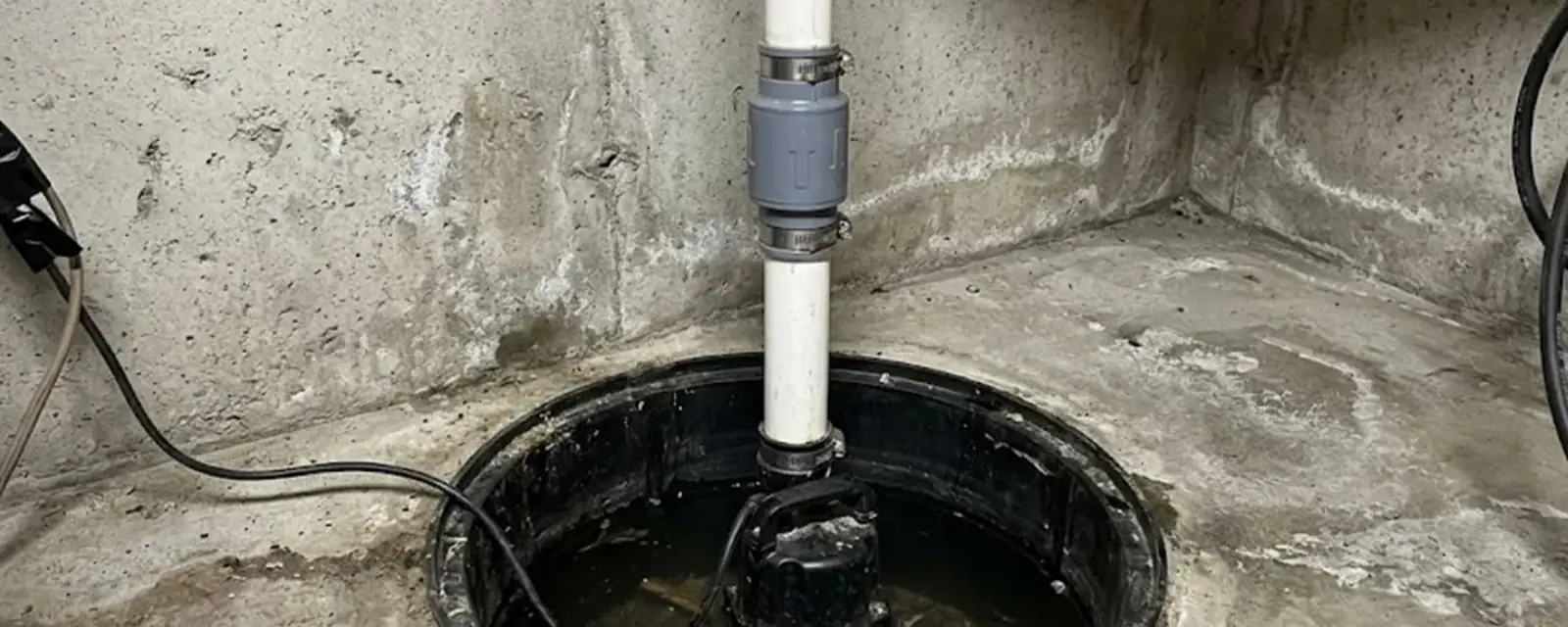
When a failed sump pump is an emergency
A sump pump is an emergency when water is rising in the pit, when the pump runs but the basement is still wet, or when a storm has knocked out power. Call us.
While you wait, lift valuables off the floor and unplug anything near the water. Do not step into standing water if outlets or the panel are near. If the pit is full and the pump is silent, check the breaker and the plug before assuming the pump is dead.
A tripped GFCI is a common reason a pump stops. A wet vacuum can buy time at the pit edge, and a bucket brigade is fine if power is out.
Photograph the water level and the damage for your insurer. Water that comes from groundwater or the sump may not be covered by a standard policy, and an endorsement is often needed, so read your policy early.
Why sump pumps fail
Pumps fail from five causes. The float switch sticks or tangles. The pump motor burns out from age. Debris clogs the intake. The check valve fails and water runs back into the pit. Or power fails when you need it most.
The West Branch DuPage River runs through the east side of West Chicago, and heavy rain raises groundwater across much of DuPage County. Homes in low spots and near waterways use their pumps hardest. A pump that has run for a decade without a test is overdue. A simple monthly test is to pour a bucket of water into the pit and watch the pump start and clear it.
Even a new pump needs a clear discharge line. A frozen or crushed outlet in winter can leave a good pump running against a blocked pipe.
Basement taking on water?
Lift valuables up and call.
Types of sump pump systems
Choose by the risk you want to cover.
| System | Strength | Limit |
|---|---|---|
| Primary pump only | Simple, reliable in normal weather | Fails when power is out |
| Primary plus battery backup | Keeps pumping through outages | Battery needs testing and replacement |
| Water-powered backup | No battery, runs on city pressure | Uses water, may be restricted |
| Dual-pump system | Redundancy for high-risk basements | More space and cost |
Where the discharge goes
The discharge pipe carries water away from the foundation. In nearby Wheaton, the city states that sump pump discharge must stay on private property unless it connects directly to the storm sewer, and that sending storm or groundwater into the sanitary sewer is illegal. Warrenville likewise treats sump connections to the sanitary sewer as illegal. Rules differ by city, so ask West Chicago Community Development at (630) 293-2200 what applies to your address.
A discharge that dumps next to the foundation returns to the pit and runs the pump nonstop. A discharge that drains toward a neighbor's yard invites a dispute. We route it away from the house, add a check valve and, where winter freezing is a risk, discuss a freeze-resistant outlet.
If the water in the basement is not groundwater but a drain backup, the fix is different. See sewer line cleaning. For longer-term moisture control, see basement waterproofing.
Sources and standards used on this page
The sources behind this service page on sump pump installation and repair are listed here. For code questions, the reference is the Illinois Plumbing Code, 77 Ill. Adm. Code 890. For licence questions, it is the Illinois Plumbing License Law and the public lookup run by the Illinois Department of Public Health. Where a city has its own permit rules, the city's guidance comes first.
Discharge rules cited here come from the City of Wheaton flooding page and the City of Warrenville stormwater page.
What to do and safety steps during a pump failure
Stay out of a flooded basement if the water is near outlets, the panel or the furnace, and switch off power to the area first if you can do it dry. Never touch a running pump with wet hands or while standing in water. Use a wet vacuum plugged into a dry circuit, or bail by hand, and call us.
What affects the price of sump pump work
The factors:
- Pump size and quality
- Repair, replacement or a new pit
- Battery backup or water-powered backup
- Discharge route and length
- Urgent problem
Standard homeowner policies often exclude groundwater and sump failure unless a water backup endorsement is added. Call (630) 822-9290 and describe the pump you have.
Sump pump questions
Call (630) 822-9290 and ask about timing for your address.
Test it monthly, and before spring and heavy-rain seasons. Pour water in the pit and watch it clear.
If the basement is finished or has taken water before, yes. Power often fails during storms.
Probably not. Many cities prohibit it. Ask West Chicago Community Development at (630) 293-2200.
Many last around ten years, but usage varies. A pump that runs all the time ages faster.