Why basements get wet
Water enters a basement by four routes. It seeps through the floor and wall joints when groundwater rises. It leaks through cracks or window wells when surface water pools. It backs up through floor drains when the sewer is overloaded. And it leaks from plumbing inside the house.
The first step is naming which one you have. A damp floor after heavy rain points to groundwater. A drain backup is a sewer problem. A wet wall below a bathroom is a plumbing leak. Waterproofing a groundwater problem while a pipe leaks will not help, so we investigate before we sell a system.
If a pump already exists, test it, since many wet basements are failed pumps. See sump pump repair if yours is down.
Interior systems, sumps and what we handle
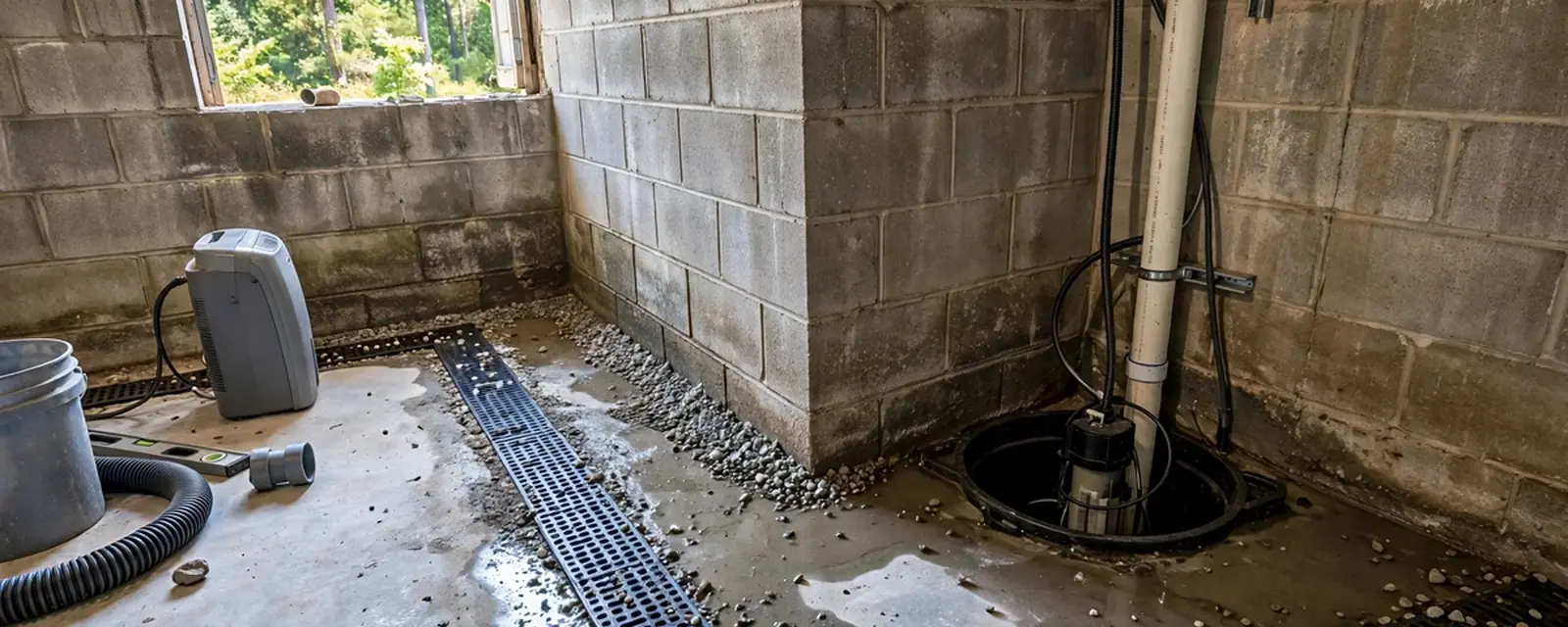
Interior drainage collects water at the footing and sends it to a sump pit. The pit holds a pump that moves water out through a discharge line. This approach does not require digging around the house, and it works on finished foundations.
We handle the plumbing side of that system: the pit, the pump, the check valve, the drain connections and the discharge. Concrete crack repair, wall coatings and exterior excavation are separate trades, and we tell you when a job needs them. Ask what is included when you call.
Waterproofing paint gets many questions. Paint can slow minor moisture on bare masonry, but it does not stop water pushing through a wall under pressure, and it can peel. Treat it as a cosmetic layer, not a system.
Water after every rain?
Call and we will find where it enters.
Common causes and first steps
Start with the cheap fixes.
Gutters and downspouts
Discharge at least several feet from the foundation.
Grading
Soil should slope away from the house.
Window wells
Clear and covered, with drainage at the bottom.
Floor drain backup
A sewer matter. See sewer line cleaning.
Local notes for West Chicago basements
West Chicago sits in DuPage County, where the West Branch DuPage River runs through the east side of the city. Rain that raises river levels raises groundwater in nearby neighborhoods. If your home is in a low spot, tell us about past water events and which areas flood.
Ask the city before you change drainage. Wheaton, for example, offers a free drainage review with its stormwater engineer, and Warrenville has a Private Property Drainage Assistance Program. West Chicago Community Development at (630) 293-2200 can tell you what programs and rules apply to your address.
Floor drains and basement bathrooms depend on the sewer line. See sewer line repair if the line itself is suspect.
Questions to ask before you hire anyone
Waterproofing is a high-pressure sale in many markets, so ask direct questions. What is the source of the water, and how did you find it? Which parts of the job are plumbing and which need another trade? Where will the pump discharge, and is that allowed at my address? What happens during a power outage?
Ask for the scope in writing, with the pit size, the pump rating, the check valve and the discharge route listed. A written scope lets you compare two quotes line by line. If a contractor will not explain why a system is needed, keep looking.
Keep a log of when water appears. Dates, rainfall and the spot on the floor help a plumber separate a groundwater problem from a drain or supply leak, and they save a visit.
Sources and standards used on this page
The sources behind this service page on basement waterproofing are listed here. Our guidance follows the Illinois Plumbing Code, which is the state's plumbing standard, and the Illinois Plumbing License Law. Neither is a substitute for your city's own permit rules. Ask the building department first, and check the licence of anyone you hire at the Illinois Department of Public Health site.
Drainage notes come from the City of Wheaton drainage review page and the City of Warrenville stormwater page.
What affects the price of waterproofing
The factors:
- Length of interior drainage needed
- Sump pit and pump size
- Backup power for the pump
- Discharge route
- Floor finishes that must be opened and restored
Insurance rarely pays for a waterproofing system, though a water backup endorsement may cover damage. Call (630) 822-9290 for a walkthrough.
Basement waterproofing questions
Planned work is scheduled, but a failed pump during a storm is an emergency. Our phone line handles those.
It slows minor dampness on bare masonry. It does not stop water pushing through a wall.
Not always. We look at when and where water appears before recommending one.
Yes. We clear the line and use a camera if the problem repeats.
Ask when you call. Some foundation work needs a specialist.