Why a backup pump matters
Storms that fill a sump pit often knock out power too. A pump that cannot run is no help. A primary pump can also fail from age, a stuck float or a clogged intake. A backup pump is a second line of defense that works from a different power source or a separate pit position.
The cost of water in a basement is far larger than the price of a backup. Carpet, drywall, furniture and stored boxes are all at risk. Many homeowners learn about backups after the first flood, and it is better to learn from this page.
Check your homeowner policy as well. Water that comes from the sump or from groundwater may need an added endorsement. Ask your insurer before the next storm.
Battery backup systems
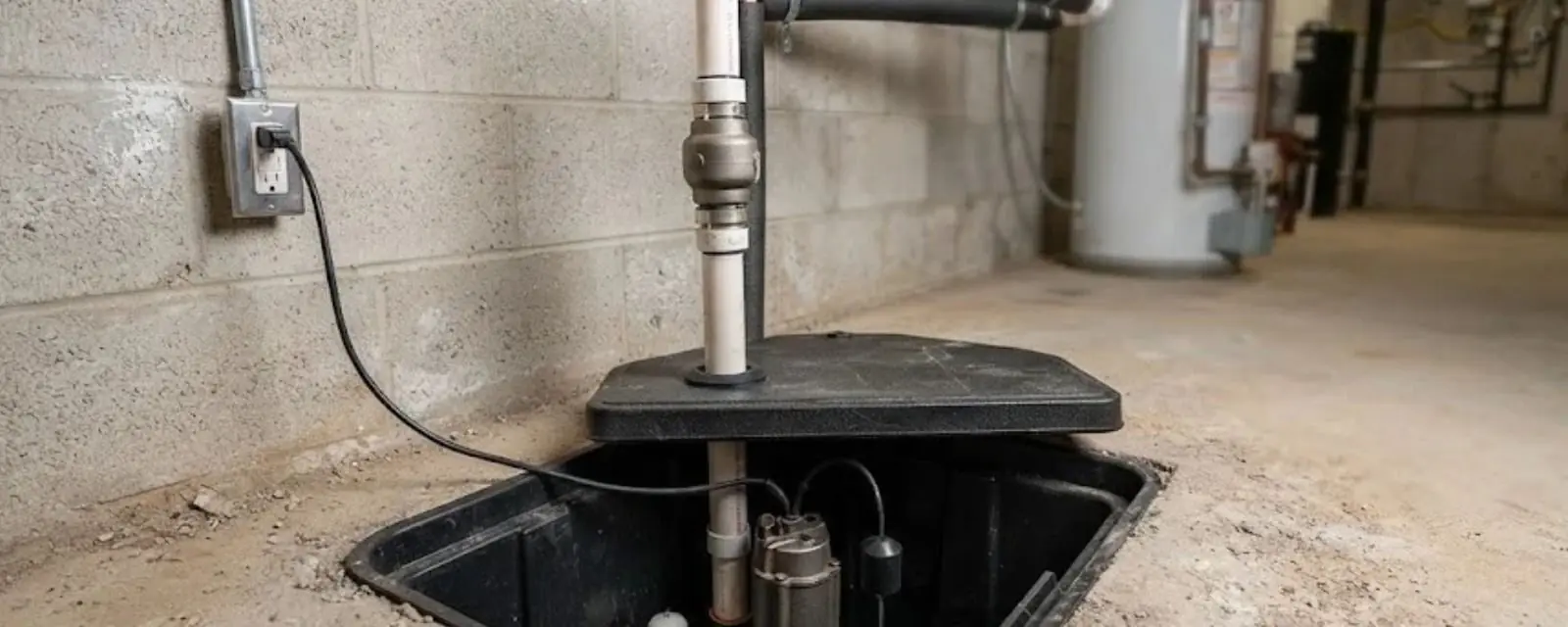
A battery system has a second pump, a marine-style battery and a charger. When the primary fails or loses power, the backup float switches it on. A good system runs for hours on a charged battery, though how long depends on how fast water enters the pit.
Batteries need testing and replacement every few years. Check the charger light and test the system twice a year by lifting the backup float. A dead battery is no better than no backup. Some systems add an alarm that sounds when the pit rises too high, which is a good feature in a finished basement.
Our sump pump repair page explains the primary pump and the discharge line, and the backup should share a safe discharge route.
Problem right now?
Call to ask about help at your address.
Backup options
Match the backup to the risk.
| Type | Strength | Limit |
|---|---|---|
| Battery pump | Works without power | Battery needs care |
| Water-powered pump | No battery, uses city pressure | Needs adequate pressure, uses water |
| Generator-fed | Runs the main pump | Needs manual start or transfer switch |
| Dual primary pumps | Redundancy | Both need power |
Water-powered backups
A water-powered backup uses city water pressure to push pit water out through a venturi. It has no battery and no motor, and it can run as long as pressure lasts. It also uses a lot of water while it runs, and it needs adequate pressure. Homes on private wells cannot use it, and some municipalities restrict it, so ask first.
If your home has city water and a finished basement, this option can be worth a look. A plumber will check your pressure, your discharge and local rules before suggesting it.
What installation involves
We inspect the pit, the primary pump, the check valve and the discharge. The backup needs its own check valve, a safe discharge and, for a battery pump, an outlet and a place for the battery. We also test the whole system by filling the pit and watching both pumps run.
A pit that is too small may need to be replaced. A discharge that is frozen or crushed must be cleared. If the basement has other moisture problems, see basement waterproofing. We serve Wheaton and Warrenville, where river-area homes use pumps hard.
Maintaining your pumps through the year
A backup is only useful if it works when called. Test both pumps in spring and in fall by pouring water into the pit until each float lifts and the pump runs. Listen for odd noises and check that the discharge runs freely outside.
Clean the pit of silt, gravel and debris once a year. A pit that fills with sand makes the pump work hard and can jam the float. Check the check valve for a clicking sound when the pump stops, which means it is working. Replace the battery on the schedule the maker gives, usually every few years, and keep the charger plugged in.
Make sure the discharge pipe has a screen or a gravel-free outlet and is not frozen in winter. A blocked discharge turns two good pumps into none.
Sizing a backup and planning the pit
A backup should move enough water to keep up with a bad storm. Ask your plumber to estimate the inflow, considering the size of the house, the soil and past events. A small pit with a large inflow fills fast, and the backup may need a wider pit or a higher rated pump.
Plan the layout. Two pumps in one pit need separate floats set at different heights, so that the primary runs first and the backup comes on only if the water keeps rising. Both pumps need separate check valves, and the discharge lines should be separate or joined above the valves. Poor layout leads to the backup pushing water back through the primary. Draw it out before you buy.
Sources and standards used on this page
The sources behind this guide on backup sump pump installation are listed here. Two state sources frame this work. The Illinois Plumbing Code sets the technical rules, and the Illinois Plumbing License Law says who may do it. Both are public, and the Illinois Department of Public Health keeps the licence lookup. Local rules, where they apply, come from your own city.
Discharge rules come from the City of Wheaton flooding page and the City of Warrenville stormwater page.
What West Chicago homeowners should know locally
Discharge rules are set by the city where you live. Wheaton says sump discharge must stay on private property unless connected to the storm sewer with a permit, and that sending groundwater into the sanitary sewer is illegal. Warrenville says a sump connected to the sanitary sewer is illegal. Ask West Chicago Community Development at (630) 293-2200 what applies at your address.
The West Branch DuPage River runs through the east side of West Chicago, so groundwater can rise with heavy rain in nearby neighborhoods.
Questions homeowners ask
It depends on the battery and how fast the pit fills. Ask for the rated pumping capacity.
No. It needs city water pressure.
Twice a year, and before storm season.
Often not without a water backup endorsement. Ask your insurer.