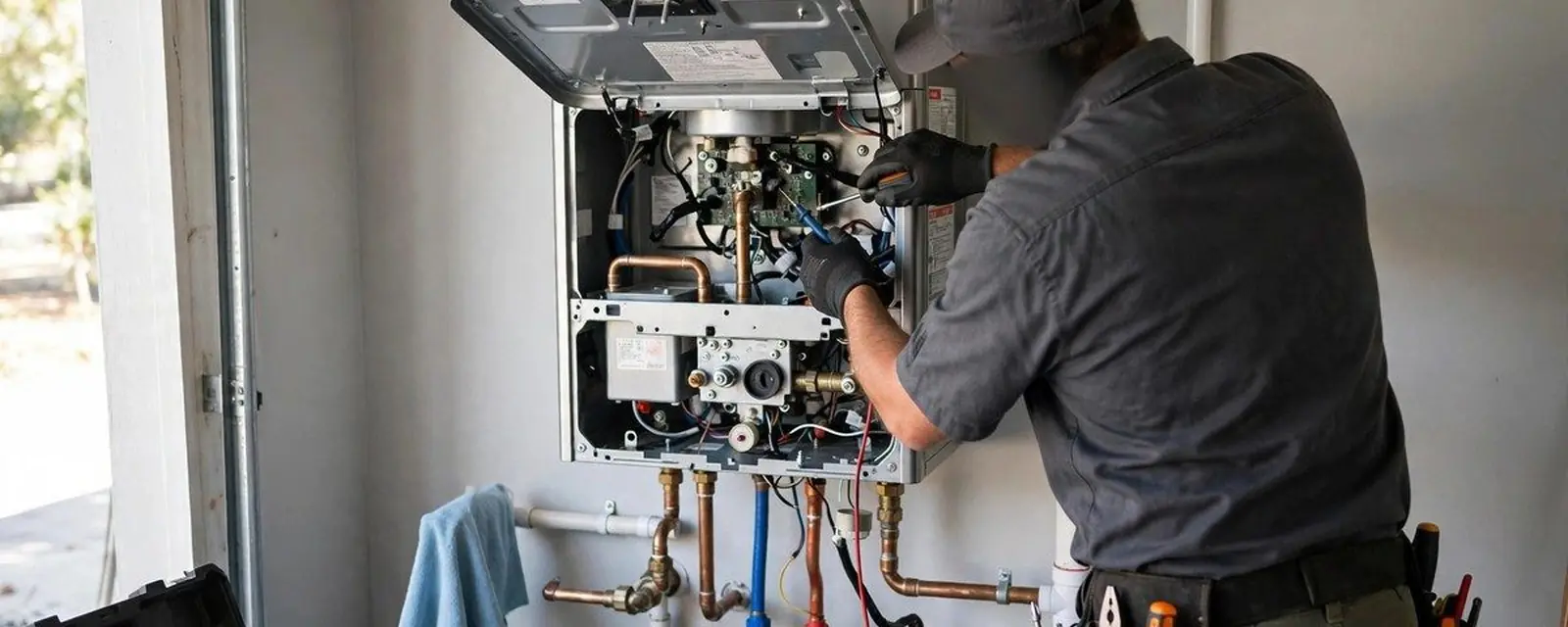
What changes when a tankless heater goes in
A tank heater is a simple appliance with a small burner or an element. A tankless heater is a powerful burner that heats water as it flows. That difference shows up on the installation. The unit needs more gas, a better vent and often a place to drain condensate. In an electric model, it needs a heavy circuit that many panels cannot support without upgrades.
The upside is endless hot water at a rate the unit can meet, and a smaller footprint on the wall. The downside is a higher upfront cost and more careful sizing. Our tankless service page explains the technology, and this guide focuses on what happens on installation day.
Gas supply and venting
Most gas tankless heaters draw far more gas at full fire than a tank. The existing gas pipe may be too small. A plumber measures the length and fittings, looks up the unit's rating and decides whether the line must be upsized. A pipe that is too small will make the unit shut down or run weak when other appliances are on.
Venting is the other big item. Condensing models run cooler and use plastic vent pipe, often out a side wall. Non-condensing models use stainless vent. The manufacturer specifies the material, the length and the clearances. We follow them, because a poor vent is a safety hazard.
If you smell gas at any time, leave the home and call 911 and your gas utility from outside. For Nicor Gas customers, the emergency line is 888.642.6748.
Problem right now?
Call to ask about help at your address.
Installation checklist
Items a plumber should confirm before the unit is ordered.
| Item | Why it matters | Typical answer |
|---|---|---|
| Gas pipe size | Heater needs full gas flow | May need upsizing |
| Vent route | Safe exhaust path | Through side wall or roof |
| Condensate drain | Condensing units make acidic water | Neutralizer and drain |
| Electrical outlet | Controls and fan need power | Standard outlet nearby |
| Water quality | Scale damages the heat exchanger | Test, consider a softener |
Sizing: flow and temperature rise
Tankless units are rated by how many gallons per minute they can heat to a set temperature rise. Cold water entering a house in northern Illinois is cold in winter, so the unit has to work harder. A heater that handles two showers in July may struggle in January. Ask for sizing based on winter incoming temperature and the fixtures you will run at once.
List the showerheads, the dishwasher, the washer and the kitchen tap. Add the flow of the biggest two or three you might run together. That number and the winter rise decide the unit. A bigger unit costs more but avoids cold-water surprises, and a second unit or a recirculation system can fix a household that is split across a long house. See water heater installation for the planning steps.
After the install
A tankless heater needs yearly flushing to remove scale. Hard water speeds the buildup, and a unit with scale loses heat transfer and may error out. Ask for a service plan or learn the flush yourself. The cost is small compared with a new heat exchanger.
If a tank unit fails and you are choosing between a swap and an upgrade, water heater replacement covers the emergency side. We install in West Chicago and also serve Carol Stream and Wheaton.
Costs and what moves the price
A tankless install costs more than a tank swap, and the spread is wide because the home decides the scope. The unit itself is only part of it. The gas line upsize, the vent run, the condensate drain, the electrical outlet, the isolation valves for flushing and the labor to rework the old tank location all add up.
Older homes can cost more because of tight spaces and old piping. A house with an unfinished basement and a short vent run costs less. Ask for the quote in lines, so you can see what is the unit and what is the work. Ask what the warranty covers and who services it.
Ask about utility rebates too. Programs change, and we do not quote them. Your gas or electric provider can say what is available today.
Common mistakes to avoid
The first mistake is undersizing. A unit sized for summer will fail in winter. The second is ignoring the gas line, which causes weak heat and shutdowns when the stove or furnace runs. The third is skipping the flush, which lets scale damage the heat exchanger. The fourth is hiring for the lowest price without checking that venting follows the manufacturer's rules.
Another mistake is expecting no wait. A tankless unit still has cold water in the pipe, and a long run still takes time to deliver heat. A recirculation loop can help, but it adds cost. Ask what to expect at your farthest fixture before you decide.
Sources and standards used on this page
The sources behind this guide on tankless water heater installed are listed here. Our guidance follows the Illinois Plumbing Code, which is the state's plumbing standard, and the Illinois Plumbing License Law. Neither is a substitute for your city's own permit rules. Ask the building department first, and check the licence of anyone you hire at the Illinois Department of Public Health site.
What West Chicago homeowners should know locally
Gas service in much of the area comes from Nicor Gas, and the emergency number is 888.642.6748. If your gas comes from another provider, use the number on your bill. A new vent or gas line change may need a permit, and West Chicago Community Development at (630) 293-2200 can say what applies.
The city's water comes from wells and is treated to remove iron and hardness, but the city does not publish a hardness figure in the report we reviewed. Test your tap before choosing a flush schedule.
Questions homeowners ask
Often yes. We measure the run and size it to the unit.
Gas and venting work should be done by a licensed plumber and checked by the city when required.
A swap can take most of a day. A full gas and vent upgrade takes longer.
Scale reduces heat transfer. Flush it on schedule.