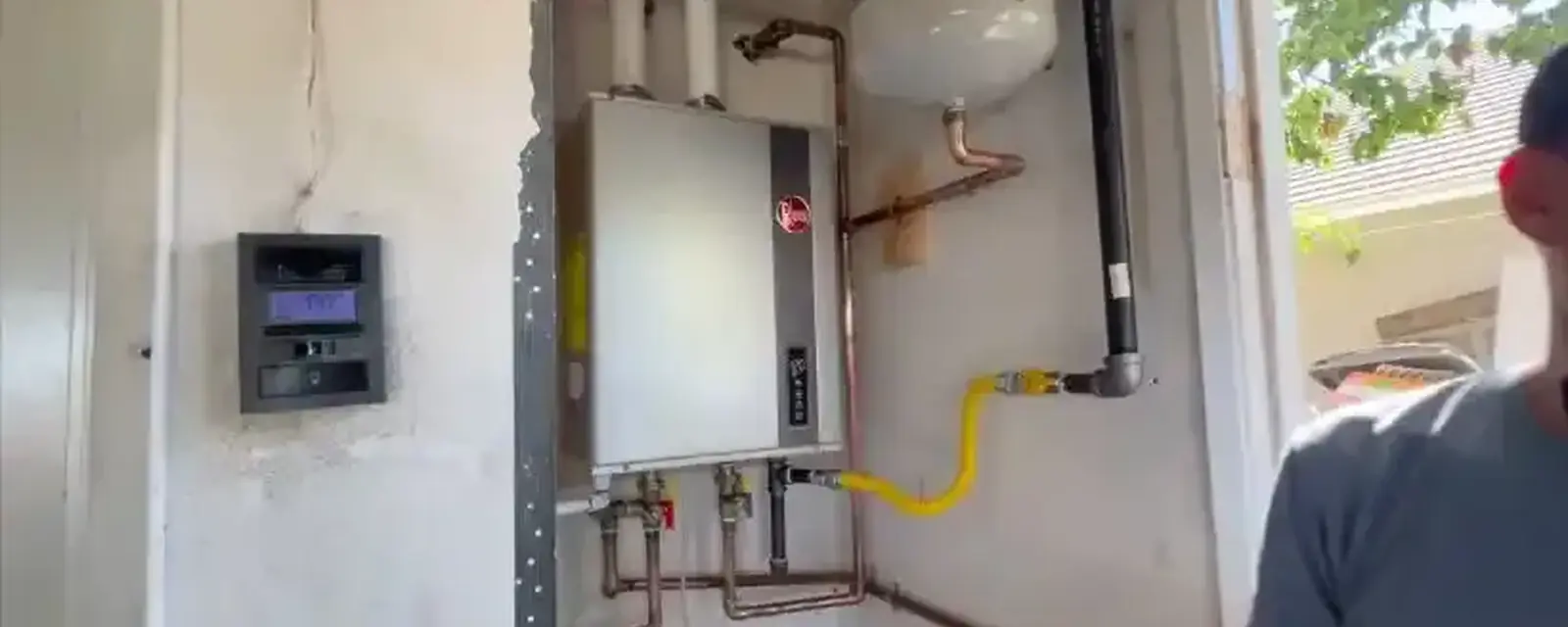
If you smell gas, do this first
Do not test for a leak yourself. Do not turn lights on or off, use a phone inside, light a match or start a car in the garage. Leave the building at once, bring everyone and pets and call 911 and your gas utility from outside.
For customers of Nicor Gas, the emergency number is 888.642.6748. If your gas comes from another provider, use the number on your bill. Stay outside until the utility or the fire department says it is safe to return. Gas can ignite from a tiny spark.
What a professional gas leak test is
A gas leak detection test checks the piping and fittings of a home for escaping gas. A licensed plumber or the utility uses calibrated tools. A combustible gas detector samples the air near joints, valves and appliance connections and reads gas concentration. A pressure test seals a section of piping, pressurizes it to a set level and watches a gauge for a drop that signals a leak.
The pressure test finds slow leaks that a detector might miss. The detector finds where a leak is. Plumbers use both, and they follow the rules for gas piping in the plumbing code and the utility's requirements.
Problem right now?
Call to ask about help at your address.
Signs and first actions
Gas safety is not a place to guess.
| Sign | Meaning | Action |
|---|---|---|
| Rotten egg smell | Possible gas leak | Leave, call 911 and utility |
| Hissing near a pipe | Possible leak | Leave, call 911 and utility |
| Dead plants near a line | Possible buried leak | Call the utility |
| Pilot keeps going out | Appliance or draft issue | Call a plumber or heating pro |
After the utility clears the home
The utility may shut off gas and tag an appliance or a line. A licensed plumber can then find and fix the leak. The repair may be a fitting, a flex connector, a valve or a section of pipe. After repair, the line is pressure tested and, where required, inspected before gas is restored.
Do not relight pilots or restore service yourself after a shutoff. The utility or a qualified technician must do it. Keep records of the test, the repair and the date. They help with insurance and sale.
Preventing gas problems
Have appliances serviced on schedule. Replace old flex connectors. Do not store paint, solvents or flammables near gas appliances. Install a combustible gas detector and a carbon monoxide alarm and test them monthly. Know where the gas shutoff is, and keep a wrench near it if the utility allows.
Our water heater installation page and boiler repair page explain the gas and venting checks we make at those jobs. This site also covers Carol Stream and Wheaton.
What a licensed plumber checks
A plumber inspects the gas meter outlet, the shutoff valves, the piping and the appliance connections. We look for corrosion, loose fittings, flex connectors that are old or kinked and piping that is unsupported. We check that each appliance has a shutoff valve within reach and that vent systems carry exhaust outside.
We use a gas detector to sample around fittings and a pressure test to check that the line holds. If we find a leak, we repair it and test again. We explain what we found and why. We do not restore gas service ourselves after a utility shutoff unless allowed. The utility or a qualified technician must do it.
Appliances and carbon monoxide
Gas leaks and carbon monoxide are different problems. A leak means unburned gas is escaping. Carbon monoxide comes from incomplete burning in an appliance or a bad vent. Both are dangerous, and both call for alarms and service.
If a carbon monoxide alarm sounds, go outside and call 911. Symptoms such as headache, dizziness and nausea in several people at once are a warning. After the fire department clears the home, have a plumber or heating technician check the appliance and the vent. Replace alarms on the maker's schedule, and test them monthly. Ask whether any gas appliance in your home has been recalled.
Buying or renovating a home
If you are buying an older home, ask whether the gas piping has been inspected. Look for black iron pipe that is rusting, flex connectors on old appliances and valves that do not turn. A renovation that moves a range, a dryer or a heater needs gas piping changes, and those should be done by a licensed plumber with a permit where required.
Ask for a pressure test after any change. Keep the records. If you add a generator, a fireplace or an outdoor grill, the gas line size may need to grow. Plan the load before you buy the appliance, since a line sized for a small stove may not carry a large range and a furnace together.
Sources and standards used on this page
The sources behind this guide on gas line leak detection test are listed here. Plumbing in Illinois follows the Illinois Plumbing Code, found at 77 Ill. Adm. Code 890, and the Illinois Plumbing License Law, 225 ILCS 320. You can check any plumber's licence through the Illinois Department of Public Health lookup. Manufacturer instructions apply to every product we install.
The emergency number comes from Nicor Gas, and the 911 advice is standard safety practice.
What West Chicago homeowners should know locally
Gas in much of this area comes from Nicor Gas. The emergency number is 888.642.6748, and you should also call 911. Work on gas piping may require a permit and an inspection, and West Chicago Community Development at (630) 293-2200 can tell you what applies.
Carbon monoxide is a separate danger. Alarms should be near sleeping areas. If one sounds, leave and call 911.
Questions homeowners ask
Do not test it yourself if you smell gas. Leave and call. Let a professional test.
The utility makes the area safe. A licensed plumber repairs piping inside the home.
Often yes for gas work. Ask the city at (630) 293-2200.
Utilities add a rotten egg smell to natural gas so leaks are noticeable.