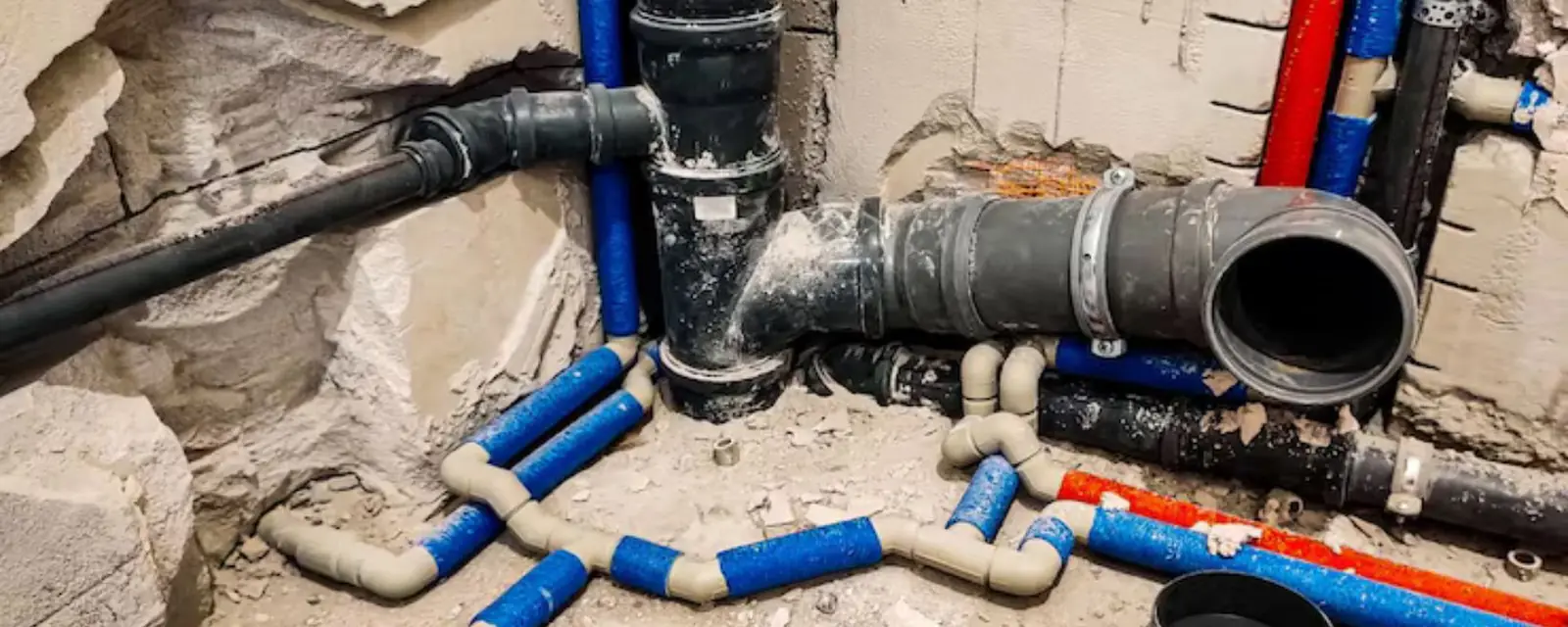
What a bathroom plumbing vent pipe does
Every drain in a house needs air. When water runs down a pipe, it pushes air ahead of it and pulls air behind it. Without a path for that air, the water slows, the trap seal can be sucked dry and the drain gurgles. The vent pipe is that path. It rises from the drain system, usually through a wall, and exits through the roof.
A bathroom usually has one or more vents serving the toilet, sink and tub or shower. In many homes a single vent stack serves several fixtures through branches. The pipe is plain and out of sight, which is why people notice it only when it fails.
The vent has a second job. It carries sewer gas up and out, away from the living space, instead of letting it collect in the house. A trap under each fixture holds a plug of water that blocks gas from entering the room, and the vent helps keep that trap full.
How the bathroom vent is laid out
Plumbers use several arrangements. A fixture can have its own vent that rises and joins the main stack above the fixture's flood level. Two fixtures can share a common vent.
An island or a remote fixture can use a loop vent or an air admittance valve, a small device that opens to let air in and closes to stop gas out. Rules for each arrangement vary, and the plumbing code limits how far a trap can sit from its vent.
You do not need to memorize the layout. What matters is that the vent must connect, rise and terminate in open air, or use an approved device. When a remodel moves a toilet or adds a vanity, the vent often has to change too. That is a common reason a new bathroom drains badly even though the drain size looks right.
If you are planning new work, see plumbing installation and talk to a plumber before the walls close.
Problem right now?
Call to ask about help at your address.
Vent problems and what they usually mean
Symptoms point to a cause, but a plumber confirms it.
| What you notice | Likely cause | What to do |
|---|---|---|
| Gurgling after a flush | Partly blocked or missing vent | Call before it worsens |
| Slow drain in several fixtures | Vent or main line | Test the main line first |
| Sewer smell in the bathroom | Dry trap or vent leak | Run water in unused drains |
| Toilet bubbles when the tub drains | Vent restriction | Have it inspected |
What blocks a vent
Most blocked vents are blocked at the roof. Leaves, a bird nest, a dead rodent, a tennis ball and, in winter, a ring of frost around the opening can all narrow it. In a hard freeze, moisture in the warm vent air can freeze at the top and slowly close a small pipe. Debris can also fall in and lodge in a bend.
Inside the wall, the usual problems are a broken or disconnected pipe from old work, a slope that lets water pool and a past patch with the wrong fitting. Rust in an old galvanized or cast iron vent can also shrink the opening.
Do not climb onto a roof to clear a vent unless you are comfortable and it is dry and safe. A plumber can check it from the attic or with a camera, and can snake it from the roof. If the drain itself seems blocked, see drain cleaning first.
When a vent problem is an emergency
A vent problem becomes urgent when the trap seal is lost and sewer gas enters the home, or when the drain stops and water backs up. If the smell is strong, ventilate the room and call. If anyone feels dizzy or ill, leave the home and call 911. Sewer gas contains methane, which is flammable, and other gases that are harmful in enough concentration.
If a drain is stopping and the main line is the real cause, our sewer line cleaning page explains the next steps. For nearby towns, our crews serve Winfield and Warrenville as well as West Chicago.
Planning a bathroom remodel around the vent
A remodel is the best time to deal with venting, because the walls are open. Before demolition, ask where the existing vent runs. A vent that rises inside a wall you plan to move has to be rerouted, and the new route must keep the right slope and size.
A toilet moved to the far side of the room may sit too far from its vent for the trap to work well, so the plan may need a new branch or a different layout.
Tell your plumber early if you are adding a second sink, a freestanding tub or a shower in a basement. Each fixture adds flow and each needs air.
Basement bathrooms below the sewer line sometimes need a pump, and the pump has its own vent. Skipping that detail leads to gurgling and smells that are hard to fix once the tile is down.
Keep a photo record of the pipes before the drywall goes up. It helps the inspector, helps the next plumber and helps you if a problem shows up years later. Ask for the vent sizes and routes in the written scope of the job.
Checking a vent on your own, safely
You can learn a lot without tools. Run each fixture one at a time and listen at the others. Pour a gallon of water into a seldom-used floor drain to refill its trap if you smell sewer gas. Look at the roof from the ground with binoculars to see whether a vent pipe is bent, capped or missing.
Do not go on a roof in winter, in the rain or when you are alone. Do not run a garden hose down a vent unless you know where the water will go. A plumber can scope the line, snake from the roof and test the system with smoke or air. That costs less than guessing and avoids a flood in the wall.
Sources and standards used on this page
The sources behind this guide on bathroom plumbing vent pipe are listed here. Two state sources frame this work. The Illinois Plumbing Code sets the technical rules, and the Illinois Plumbing License Law says who may do it. Both are public, and the Illinois Department of Public Health keeps the licence lookup. Local rules, where they apply, come from your own city.
What West Chicago homeowners should know locally
Plumbing work in West Chicago that adds or moves a vent may need a permit. The city's Community Development department can be reached at (630) 293-2200 and can tell you what applies to your address. Ask before the walls are opened, since an inspector may need to see the vent and drain before they are covered.
Winter matters here. West Chicago has cold, freezing weather, and a small vent pipe can ice over at the roof. If your bathroom starts gurgling on the coldest mornings and clears in the afternoon, mention that to the plumber. It is a clue worth having.
Questions homeowners ask
Yes. A partly blocked vent can slow the flow and make fixtures gurgle.
Many codes allow them in certain places. Ask the city before relying on one.
Only if you can do it safely. A plumber can check it with a camera or snake it.
Ask West Chicago Community Development at (630) 293-2200 about your project.