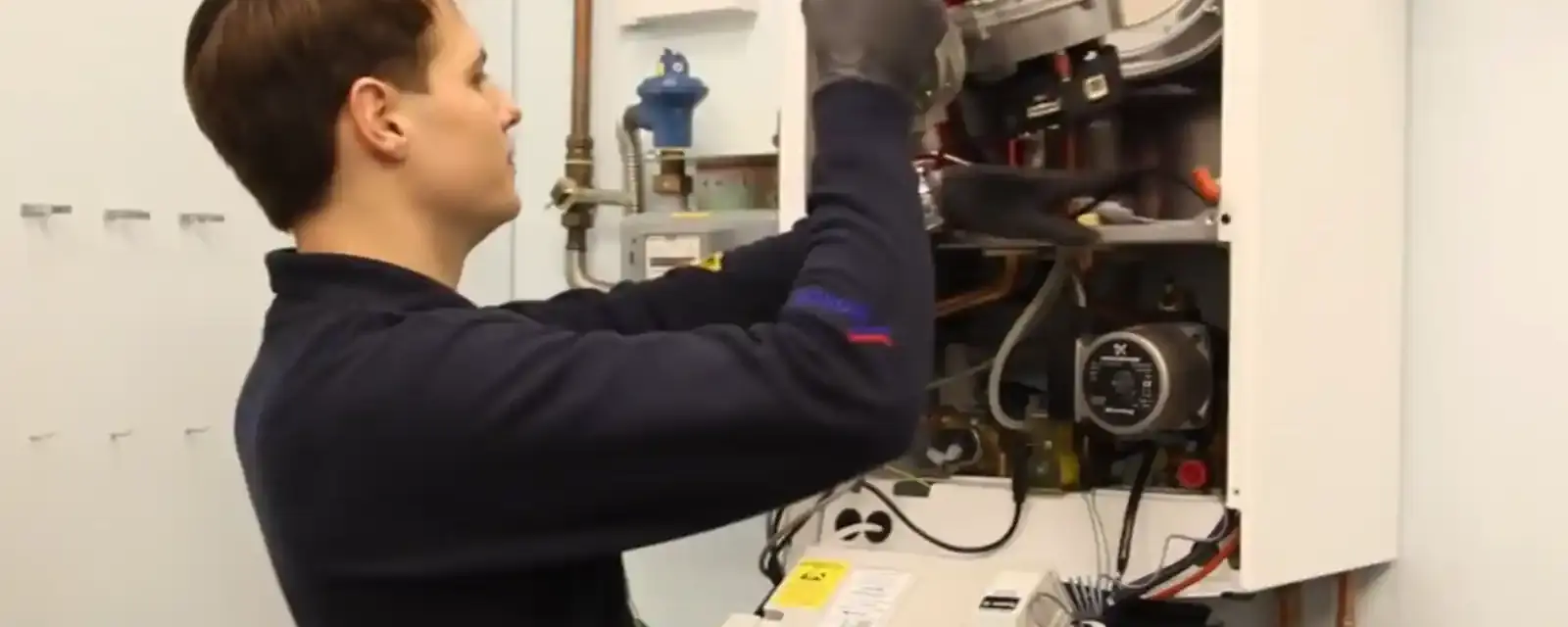
Why steam boilers leak
A steam boiler heats water in a closed vessel until it turns to steam. The steam rises through pipes to radiators, gives up heat, condenses and returns as water. Because the system runs hot and cycles between hot and cool, parts wear, corrode and loosen. Water is lost over time, and a leak makes it worse.
Most leaks occur at connections, where metal expands and contracts. Gauge glass fittings, low-water cutoffs, safety valves, pipe unions, and the boiler body itself all take stress. Mineral buildup and old gaskets add to it.
Where the water shows up
A puddle at the base can come from several places. Look at the gauge glass and the fittings around it. Check the pressure relief valve and its pipe, which should be dry. Follow the supply and return pipes for wet joints. A leak from the boiler's seams or sections means the boiler is near the end of its life.
A leak at the safety valve can mean pressure is too high, and it should be treated as a warning. Steam is hot enough to scald, so keep away from any hissing joint. Turn off the boiler and the water feed, and call.
Problem right now?
Call to ask about help at your address.
Where steam boilers leak
Common spots and typical fixes.
| Location | Typical cause | Fix |
|---|---|---|
| Gauge glass fittings | Worn gasket or cracked glass | Replace gasket or glass |
| Relief valve | High pressure or worn seat | Check pressure, replace valve |
| Pipe union or valve | Loose packing or corrosion | Tighten or replace |
| Boiler sections | Corrosion or crack | Often replacement |
| Low-water cutoff | Sediment or wear | Clean or replace |
What to do first
Turn off the burner or the boiler switch. Close the cold water feed if you can. Do not touch a hot boiler. Photograph the leak and the gauge, and note the pressure if it shows one. Keep people away from steam.
If you smell gas, leave the building and call 911 and your gas utility from outside. For Nicor Gas customers, the number is 888.642.6748. Our boiler repair page explains what we handle on the water side, and we tell you if a problem belongs to a heating specialist.
Repair or replace
A leaking valve, gasket or fitting is a repair. A leak from a boiler section is rarely worth fixing, since the metal around it is thin. If the boiler is old, leaks more than once or needs fresh water often, ask for a plain comparison of repair and replacement.
Water treatment matters. A system that is flushed and kept at a proper level lasts longer. A fresh water feed that runs all the time carries minerals that scale the boiler. We can check the feed and the water level during a visit. If a leak has damaged floors, see leak detection to rule out other sources, and our Warrenville and Winfield crews also cover boilers.
Prevention and maintenance
Steam boilers last longer with routine care. Check the water level in the gauge glass weekly during the heating season. Blow down the low-water cutoff on the schedule the maker suggests, since sediment builds there. Keep the area around the boiler clear and dry, and look for rust streaks or white mineral crust that signal a slow leak.
Have the system inspected before winter. A plumber or heating contractor can check the controls, the safety valve and the piping. Fix small leaks before they grow. Record the water you add, because a boiler that needs more water each week has a leak somewhere, even if you cannot see it.
Steam noise and what it tells you
Banging pipes, hissing vents and a boiler that cycles often are signs that something is off. Water hammer often points to condensate trapped in a pipe that does not pitch back to the boiler. A hissing vent that never closes may be stuck. Short cycling can mean the pressure setting is wrong or the boiler is oversized.
These problems may or may not involve a leak, but they stress the system and can lead to one. If a problem is on the burner or control side, a heating specialist handles it. If it is water, pipes or valves, we can help. Tell us what you hear and see.
Costs and questions to ask
Cost depends on the part, the access and whether the boiler must be drained and refilled. A gauge glass or a gasket is a small job. A relief valve takes more time. A leak in a section or a heat exchanger can cost more than the boiler is worth.
Ask for the diagnosis, the options and the price before work starts. Ask whether the repair addresses the cause or only the symptom. Ask how long the part and the labor are warranted. If replacement is the answer, ask for a plain comparison of boiler types and what each requires of your piping and venting.
Sources and standards used on this page
The sources behind this guide on steam boiler leak repair are listed here. The standard for plumbing work in this state is the Illinois Plumbing Code, published as Part 890 of Title 77 of the Illinois Administrative Code. Licensing falls under the Illinois Plumbing License Law, 225 ILCS 320, administered by the Illinois Department of Public Health. We also follow each maker's written guidelines.
What West Chicago homeowners should know locally
Many older homes in the established blocks of West Chicago and nearby towns still use boilers, and winter is when failures show up. Ask West Chicago Community Development at (630) 293-2200 whether a replacement needs a permit, since gas work often does.
Water in this area is treated groundwater. The city's report, available from Public Works at (630) 293-2255, does not publish a hardness figure in the issue we reviewed, so ask your plumber to check scale in the boiler.
Questions homeowners ask
It can be. Hot steam can scald, and a failing boiler can lose water and overheat. Turn it off and call.
A leak, a bad trap or lost condensate. A plumber can find where it goes.
Not safely. Small leaks tend to grow.
Many last decades with care, but each unit differs.